What Is a Ribbon Mixer? Working Principle, Components & Functions
Learn what a Ribbon Mixer is, how it works, its main components, and industrial applications for powder and granular blending. Discover custom Ribbon Mixer solutions from RST
A Ribbon Mixer is an industrial mixing machine designed to blend powders, granules, and other bulk solid materials into a uniform mixture. It is widely used in chemical, food, animal feed, building materials, agrochemical, and other manufacturing industries.
Using a helical ribbon agitator rotating inside a horizontal mixing chamber, a Ribbon Mixer continuously moves and circulates materials to promote uniform blending throughout the batch.
This article explains what a Ribbon Mixer is, its working principle, main components, industrial applications, and the key factors to consider when selecting the right machine for your production requirements.
1. What Is a Ribbon Mixer?
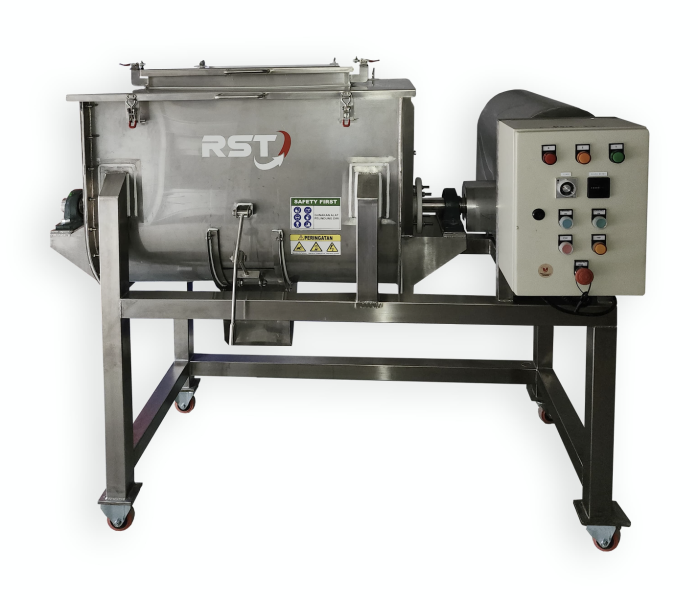
A Ribbon Mixer, also known as a Ribbon Blender or Horizontal Ribbon Mixer, is a bulk solid mixing machine featuring a horizontal U-shaped or semi-cylindrical mixing trough.
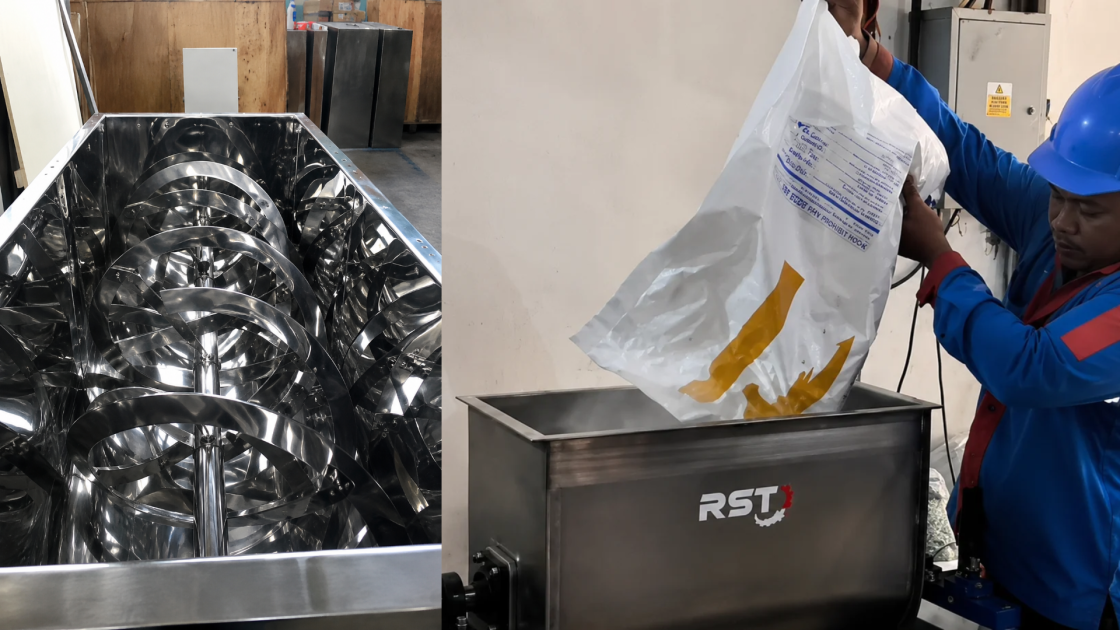
Inside the chamber, a central shaft is equipped with two helical ribbon assemblies: an inner ribbon and an outer ribbon.
These ribbons are designed to move materials in complementary directions, allowing materials from different areas of the chamber to circulate and mix.
Ribbon Mixers are commonly used for blending:
Industrial powders and fine materials.
Granules and particulate materials.
Raw materials with different particle sizes and bulk densities.
Dry materials with limited liquid addition, where the machine design supports the application.
A Ribbon Mixer is not a direct replacement for a High Speed Disperser used for liquid pigment dispersion. Equipment selection should be based on the material characteristics and the intended processing objective.
2. How Does a Ribbon Mixer Work?
The working principle of a Ribbon Mixer is based on convective mixing, generated by the complementary movement of the inner and outer ribbons.
When the motor and gearbox rotate the main shaft, the ribbons move the material throughout the mixing chamber.
Outer Ribbon Movement
The outer ribbon is generally designed to move material from both ends of the chamber toward the center. This movement helps transport material from the end sections into the main mixing zone.
Inner Ribbon Movement
The inner ribbon is generally designed to move material from the center toward both ends of the chamber. This helps redistribute material toward the end sections and supports continuous circulation throughout the mixing chamber. The actual direction of material movement depends on the helix design, shaft rotation, and machine configuration.
The Mixing Process
The combined movement of the inner and outer ribbons creates longitudinal circulation, together with radial movement and material folding. This continuous circulation helps reduce concentration differences between different areas of the batch and promotes a more uniform mixture. Mixing time and homogeneity depend on material properties, particle size, bulk density, chamber fill ratio, rotational speed, and ribbon geometry.
3. Main Components of a Ribbon Mixer and Their Functions
A Ribbon Mixer consists of several mechanical components that work together to provide stable and efficient mixing.
A. Mixing Chamber
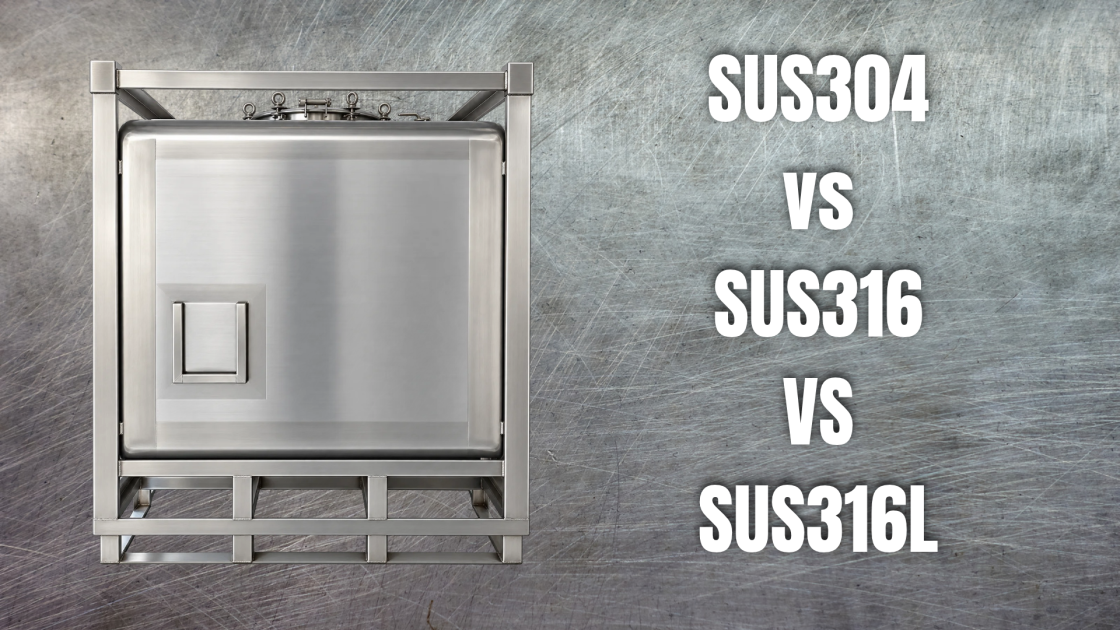
The mixing chamber is the main vessel where the materials are blended. It typically features a horizontal U-shaped or semi-cylindrical design to support material circulation. Construction materials may include carbon steel or stainless steel grades such as SUS304 and SUS316L, depending on product characteristics, hygiene requirements, and corrosion resistance.
B. Inner and Outer Ribbons
The ribbons are the primary mixing elements responsible for material movement. The inner and outer ribbons have different helical configurations that generate complementary material flow patterns. Ribbon geometry, pitch, diameter, and clearance from the chamber must be designed according to the material characteristics and machine capacity.
C. Main Shaft
The main shaft transmits torque from the drive system to the ribbon assemblies. It must be designed to withstand mechanical loads, starting torque, and the forces generated during mixing. Shaft diameter and support arrangements are determined by batch capacity, material properties, and operating requirements.
D. Motor and Gearbox
The motor provides the power required to rotate the mixing system, while the gearbox reduces motor speed and increases torque to suit the application. Motor and gearbox selection should consider batch capacity, bulk density, material characteristics, starting loads, and operating duration.
E. Bearings and Shaft Seals
Bearings support the shaft and allow it to rotate smoothly and consistently. Shaft seals help minimize material leakage around the shaft penetration points in the mixing chamber. Bearing and seal selection should consider the material being processed, operating temperature, dust exposure, and process hygiene requirements.
F. Discharge Valve
The discharge valve allows the blended material to be released after mixing. Discharge arrangements may include slide gates, butterfly valves, or customized configurations based on material characteristics and downstream filling or packaging requirements.
G. Covers and Safety Guards
Covers enclose the top of the mixing chamber and help prevent material from escaping during operation. Safety guards and interlocks can be incorporated to improve operator safety during operation and inspection.
4. Industrial Applications of Ribbon Mixers
Ribbon Mixers are used across a wide range of industries requiring consistent blending of bulk solid materials.
| Industry | Typical Applications |
|---|---|
| Chemical | Blending chemical powders and additives |
| Building Materials | Mixing dry mortar, dry cement blends, and construction materials |
| Food & Beverage | Blending flour, premixes, seasonings, and dry food ingredients |
| Animal Feed | Mixing feed ingredients and feed premixes |
| Agrochemical | Blending powder and granular formulations |
| Pharmaceutical | Blending powders and raw materials under specific process and validation requirements |
For food and pharmaceutical applications, the machine may require product-contact materials, easy-to-clean surfaces, suitable sealing systems, and validation procedures based on the applicable process requirements.
5. How to Determine Ribbon Mixer Capacity
Ribbon Mixer capacity should be determined based on the working volume of the chamber and the bulk density of the material.
The batch weight is not the same as the geometric volume of the chamber. Sufficient space must be provided to allow the material to circulate and blend effectively.
A basic formula for estimating batch weight is:
Batch Weight (kg) = Working Volume (L) × Bulk Density (kg/L)
For example:
If the machine has a working volume of 2,000 liters and the material has a bulk density of 0.75 kg/L:
Batch weight = 2,000 × 0.75
Batch weight = 1,500 kg
This calculation is an estimate based on working volume. Actual capacity must also consider the recommended fill ratio, material characteristics, and process test results.
Other important selection factors include:
Bulk density and its variation during processing.
Particle size, shape, and distribution.
Material flow characteristics.
Required blending uniformity.
Required mixing time.
Construction materials and surface finishing.
Feeding, discharge, and integration with the production line.
PT Rho Sigma Trijaya (RST) provides industrial mixing equipment designed around customer process requirements and technical specifications.
Ribbon Mixers can be developed based on batch capacity, material characteristics, construction requirements, and production configuration.
The design scope may include:
Mixing chamber capacity and dimensions based on production requirements.
Construction materials such as SUS304, SUS316L, or carbon steel, depending on the application.
Ribbon configuration and drive system based on material characteristics.
Customized discharge arrangements for downstream processes.
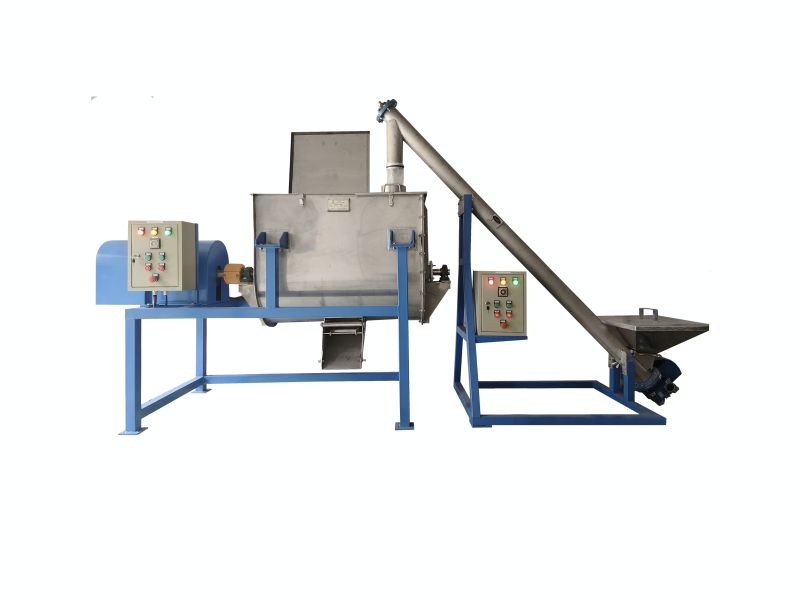
Integration with dust collectors, conveyors, and other supporting equipment as required by the project.
Each design should be evaluated using customer process data to ensure that capacity, drive selection, and mechanical configuration are suitable for the intended application. RST provides custom manufacturing solutions for various industries, including chemical, paint, adhesive, building materials, agrochemical, and food processing.
Contact PT Rho Sigma Trijaya to discuss a Ribbon Mixer solution tailored to your application and production process.
Website: https://www.rhosigmatrijaya.co.id
Email: sales1@rhosigmatrijaya.co.id
Frequently Asked Questions (FAQ)
What is the difference between a Ribbon Mixer and a Ribbon Blender?
Ribbon Mixer and Ribbon Blender generally refer to the same type of equipment: a bulk solid mixing machine that uses helical ribbons inside a horizontal chamber.
What materials can a Ribbon Mixer process?
Ribbon Mixers are primarily used for powders, fine materials, granules, and bulk solids. Materials with special characteristics should be evaluated before selecting the machine design.
Can a Ribbon Mixer mix liquids?
A Ribbon Mixer can support limited liquid addition to bulk solids when the machine is designed for that application. For liquid dispersion involving high viscosity or intensive agglomerate breakdown, other equipment may be required.
How is Ribbon Mixer capacity determined?
Capacity is determined by working volume, material bulk density, fill ratio, and process characteristics. Batch weight can be estimated by multiplying working volume by bulk density.
Can Ribbon Mixers be custom manufactured?
Yes. The machine configuration can be customized according to capacity, construction materials, product characteristics, discharge requirements, and production line integration.
How long does Ribbon Mixer blending take?
Mixing time depends on the material, ribbon design, rotational speed, fill level, and required blending uniformity. Actual mixing time should be established through material testing or process trials.